Hurricane Season Prep in Hernando County: Your Zone, Your Sandbags, Your Plan
By Hernando Beacon · July 2, 2026 · 4 min read
 Part of our complete guide: Best HVAC Companies in Brooksville, FL: Who's Actually Local →
Hernando County sits in an awkward spot on the map. The coast at Hernando Beach, Bayport, and Aripeka takes the water. Inland Spring Hill and Brooksville take the wind and the trees. The 2024 season proved both halves in the span of two weeks: Helene shoved surge into the coastal neighborhoods in late September, and Milton followed with the inland gusts that snap oaks and drop them across driveways. Your prep should match the risk your part of the county actually faces, not a one-size checklist. Here is how to sort that out before the next cone appears over the Gulf.
Know your zone, then know your neighborhood
Hernando’s evacuation zones run A through E, with A being the most vulnerable to storm surge. You can pull your exact zone at floridadisaster.org/knowyourzone by typing in your address. Do it once, write it on the fridge, and understand that officials may call for different zones depending on the storm. A Category 2 may only trigger Zone A; a Category 4 can push the order inland to B, C, and beyond. The zone is not the same as your FEMA flood zone, and it can change storm to storm.
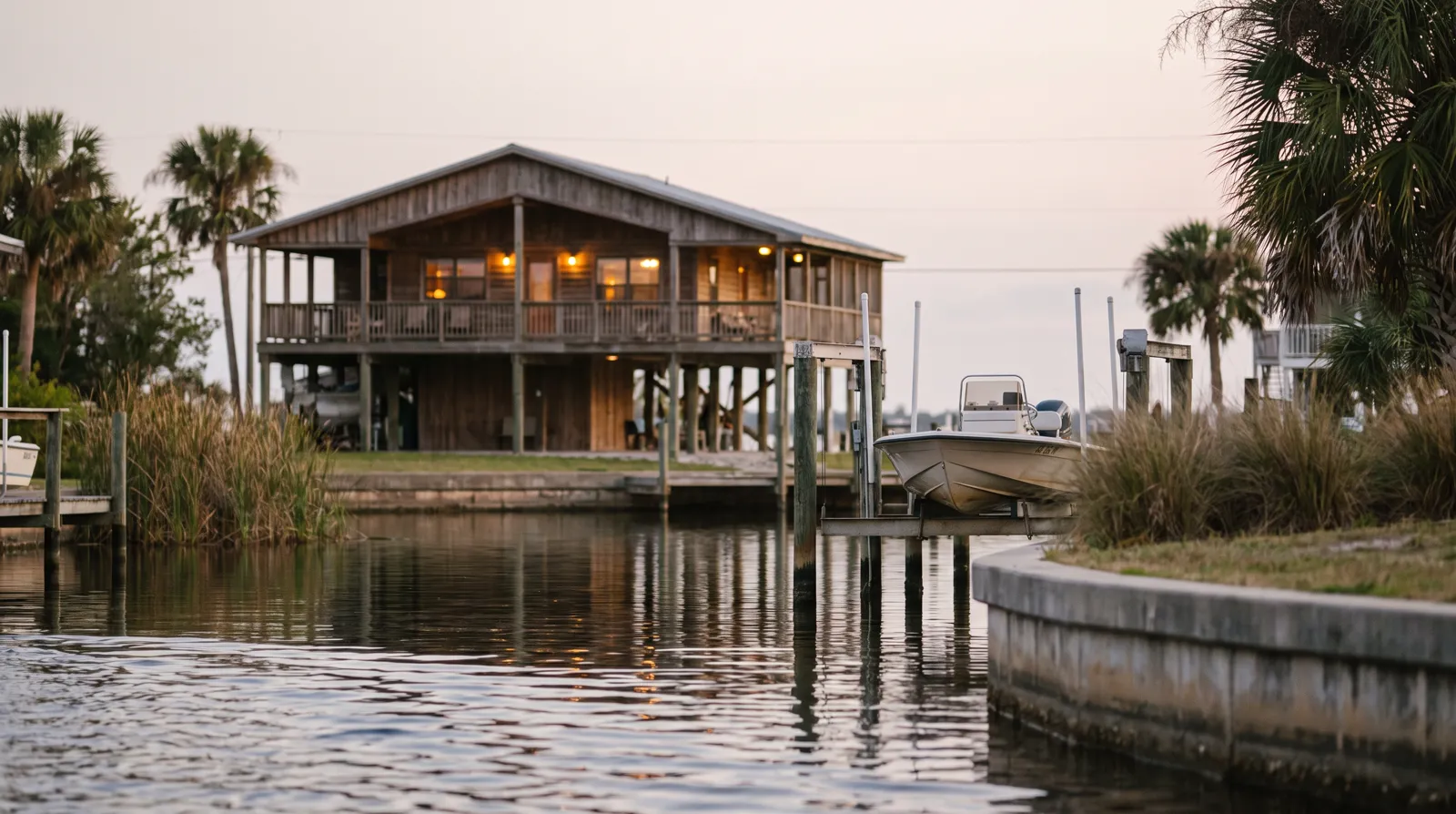
What the zone map doesn’t tell you is what happened on the ground. During Helene, storm surge in parts of Hernando County ranked among the top five highest ever recorded. Some Hernando Beach homes took roughly four feet of water inside, and one documented case saw about eight feet of total surge. The canal-front lots off Shoal Line Boulevard and the low streets near Rogers Park are exactly the addresses that flood first. Meanwhile, elevated and stilt homes in Weeki Wachee came through Idalia’s surge measurably better than slab-on-grade construction nearby. If you live on the water, elevation is everything. If you live inland in Spring Hill or Brookridge, your enemy is the tree line, not the tide.
Where to get free sandbags
Hernando County has run free, self-serve sandbag stations in past seasons at three spots. Bring your own shovel. The sand and empty bags are provided; the labor is yours.
- Anderson Snow Park — 1360 Anderson Snow Rd, Spring Hill
- Linda Pedersen Park — 6300 Shoal Line Blvd, Spring Hill
- Ridge Manor Community Center — 34240 Cortez Blvd, Ridge Manor
Stations typically open a few days ahead of an approaching storm and can run dry fast once an evacuation watch is issued, so go early rather than the night before landfall. Confirm the current season’s open sites and hours through Hernando County Emergency Management before you drive out. Linda Pedersen Park is the practical choice for the coastal Shoal Line corridor; Ridge Manor Community Center covers the eastern end of the county along Cortez.
Register vulnerable family members ahead of time
If someone in your household is elderly, disabled, or relies on electric-powered medical equipment, the Special Needs Shelter registry exists for them, but it comes with an important caveat. It is a shelter of last resort, not a guaranteed bed, and the registration must be renewed every single year. Signing up once in 2023 does not carry you into this season.
Register through the Florida Department of Health in Hernando County or by calling Emergency Management at (352) 754-4083. Do it now, in calm weather, not when a storm is 48 hours out and phone lines are jammed. Have a backup plan for that person regardless, because a shelter of last resort should be exactly that.
Storm debris is not household trash
After Helene, one of the biggest sources of confusion was what to do with the wreckage. Storm debris and regular garbage are handled differently, and mixing them slows the whole cleanup down.
Post-Helene curbside debris pickup covered the zone between Cortez Boulevard (CR 550) and Osowaw Boulevard, west of US 19. Residents could also haul their own storm debris to two sites: the Northwest Solid Waste Facility at 14450 Landfill Rd and the West Hernando Convenience Center at 2525 Osowaw Blvd. Both accepted resident storm debris only. Contractors could not dump there, so if you hire a crew to clear downed limbs, they are responsible for their own disposal. The county debris hotline during that recovery was 833-307-5580.
A few things that keep pickup moving:
- Separate vegetative debris (branches, tree limbs) from construction debris (drywall, fencing, roofing).
- Keep piles at the curb but clear of storm drains, hydrants, and mailboxes.
- Household trash and normal bagged garbage stay on your regular collection schedule; don’t fold it into the storm pile.
Generators, restoration, and the recovery caveat
Generators save the food in your freezer and, sometimes, save a life, but running one wrong is how carbon monoxide gets into a house. Keep it outside, well away from windows and doors, never in a garage. Permanent standby generators and certain temporary hookups can touch on code and permitting rules during recovery, and those specifics are best confirmed with Hernando County code enforcement rather than assumed. If you’re planning a whole-home unit, ask before you install, not after.
When water does get inside, the clock matters. Mold takes hold within a day or two in Florida humidity, so drying and remediation shouldn’t wait for insurance paperwork to finish. SERVPRO of Hernando County is a local storm and water-damage restoration provider serving Spring Hill, Weeki Wachee, and Brookridge, and having a name in your phone before the storm beats searching for one during a countywide scramble.
Your single most authoritative source through all of it is Hernando County Emergency Management at 18900 Cortez Blvd in Brooksville. The office line is (352) 754-4083, and the recorded information line is (352) 754-4111. Pull your evacuation zone this week, pin the sandbag sites, renew that special-needs registration, and put your plan on paper before the Gulf gives you a reason to.